Meet the Node.js Interactive Speakers at RenderATL 2026
Node.js Interactive comes to RenderATL with talks on AI-assisted development, performance, open source infrastructure, documentation, and the engineering practices teams need now.
TLDR: Node.js Interactive at RenderATL 2026 will bring together maintainers, platform engineers, developer advocates, researchers, and open source leaders for a focused set of technical talks. The program looks at how Node.js developers are building with AI, keeping applications reliable, maintaining critical infrastructure, and shaping the next era of JavaScript systems. Here are the speakers joining us and what they will be sharing.
---
Node.js has always sat close to the practical edge of software development. It powers production services, developer tools, web applications, internal systems, and the open source infrastructure many teams depend on every day.
This year’s Node.js Interactive program at RenderATL meets developers at a moment when that practical edge is shifting again. AI is changing how code gets written. Platform teams are carrying more responsibility for speed and safety. Open source maintainers are rethinking how critical infrastructure survives the next decade.
The speakers joining Node.js Interactive bring that work into the room through real systems, active projects, and hands-on lessons from the field.
Build AI tools developers can trust
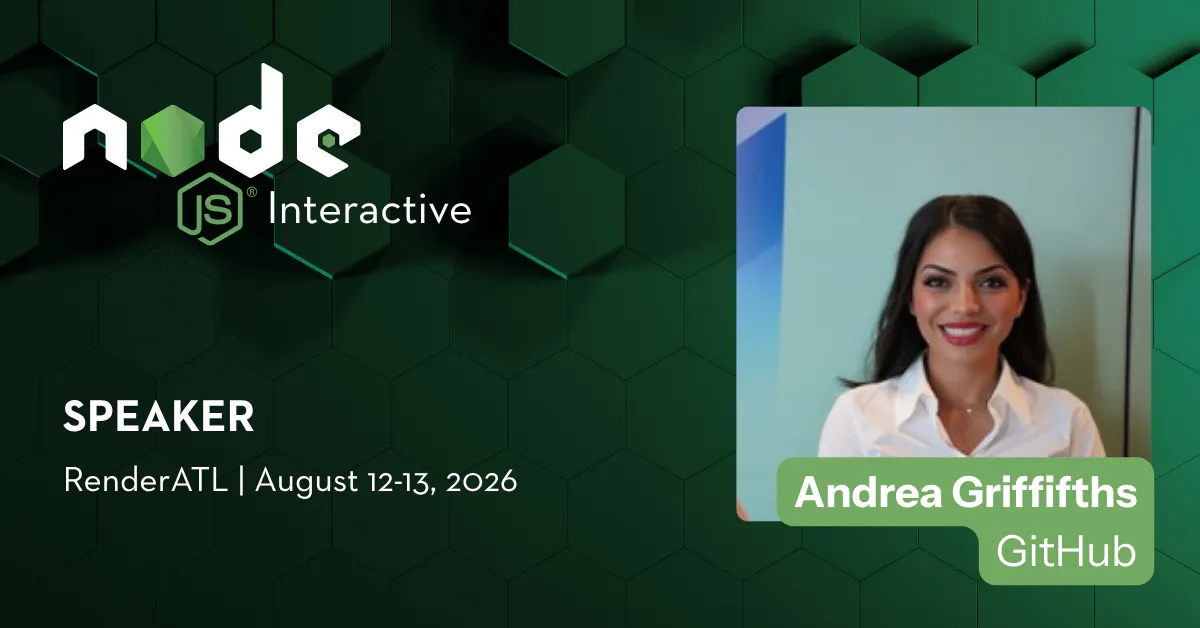
Andrea Griffiths – Senior Developer Advocate, GitHub
Andrea Griffiths is a Senior Developer Advocate at GitHub. She hosts The GitHub Podcast, Open Source Friday, and GitHub Checkout, and writes Main Branch, a weekly newsletter on developer fundamentals. She learned to code through freeCodeCamp in 2016 while raising her kids, made a career pivot in her mid-30s, and has been building developer tools ever since. Based on Florida’s west coast, Andrea creates content in English and Spanish and has deep ties to the Latin American developer community.
Session topic: Node.js After the AI Shift: Building Tools Developers Can Trust
Andrea will look at AI as part of the developer stack, not as a standalone feature. Her talk covers practical Node.js patterns for building AI-powered developer tools and application features, including inputs, context, tool calls, guardrails, evaluation, and developer experience. Attendees will leave with a grounded model for deciding when to use agents, when traditional automation is enough, where human review still matters, and how to avoid common failure modes such as weak context boundaries or brittle tool calls.
Imagine new interfaces in the age of AI
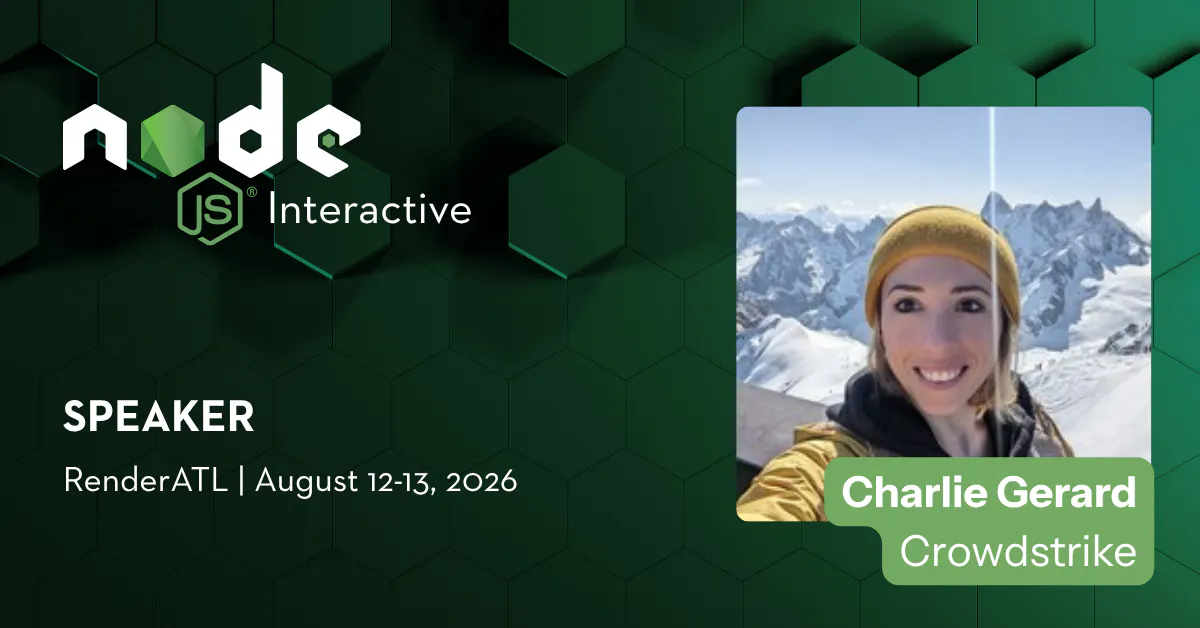
Charlie Gerard – Senior Research Engineer, CrowdStrike
Charlie Gerard is a Senior Research Engineer at CrowdStrike, a published author, and a creative technologist. For more than a decade, she has explored innovative technologies and pushed the boundaries of what can be done with JavaScript. Her work has included brain-controlled web interfaces, machine learning models for motion control, and experimental web projects. She is also a runner, drummer, and beginner mountaineer.
Session topic: Imagineering Future Interfaces
Charlie’s talk asks what software engineering could look like when AI writes more of the code. She will share advice, examples, and lessons from her work prototyping new interfaces and interactions. The session focuses on creativity as an engineering skill, with a special emphasis on how UI engineers can use this moment to rethink their role and build interfaces that feel different from what came before.
Test complex systems without simplifying them
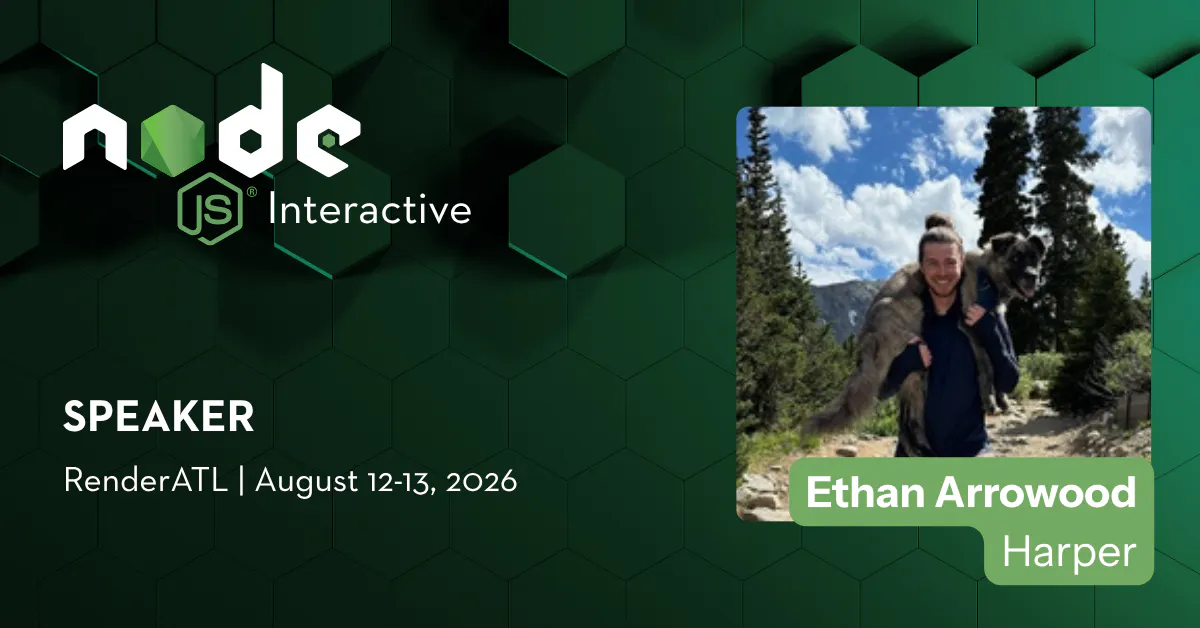
Ethan Arrowood – Head of Open Source Engineering, Harper
Ethan Arrowood is the Head of Open Source Engineering at Harper, where he leads the company’s transition to an open source first platform while balancing community trust, business sustainability, and engineering velocity. He is a Node.js core contributor and an active member of the OpenJS Foundation and WinterTC, where he works on standards and community efforts for web-interoperable runtimes. Previously, Ethan held engineering roles at Vercel and Microsoft. Outside engineering, he is a professional ski instructor and an active volunteer with organizations focused on adaptive recreation, environmental sustainability, and youth development.
Session topic: Performant, Parallelizable, Framework Agnostic Node.js Integration Testing
Ethan will walk through the Harper Integration Testing framework (@harperfast/integration-testing) he built to address this. The talk covers how to parallelize test executions when each test requires its own dedicated process, dynamic port allocation strategies that prevent conflicts across parallel processes, and how to make all of it work consistently across local machines, different operating systems, and CI environments. He will also walk through the design principles behind a framework-agnostic testing API and two concrete integrations, one with Node.js Test Runner and one with Playwright.
Keep client performance visible when AI writes more code
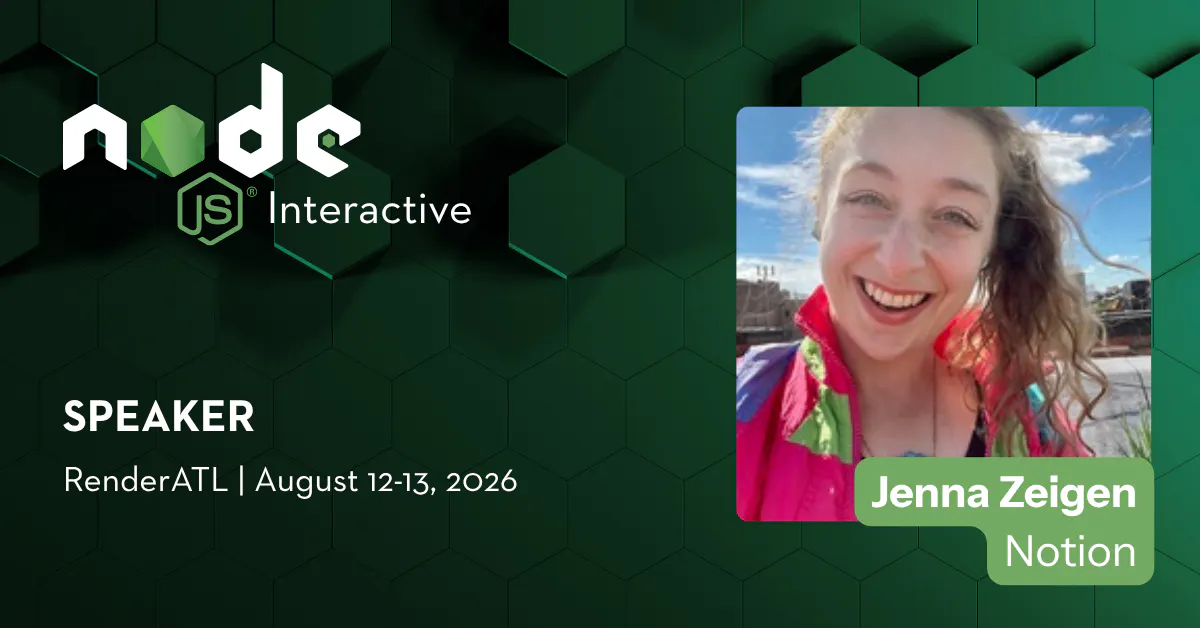
Jenna Zeigen – Senior Staff Engineer, Notion
Jenna Zeigen is a Senior Staff Engineer at Notion on the Web Infrastructure team, where she works on making the app faster and building a performance culture rooted in understanding the systems the app depends on. Before Notion, she was deeply involved in JavaScript communities and has long enjoyed explaining complex technical topics in memorable ways.
Session topic: Client Performance in the Age of AI
Jenna will focus on the performance risks that appear when AI helps teams write more code, faster. Drawing on experience keeping complex apps such as Slack and Notion fast, she will discuss strategies for ensuring web applications continue to run smoothly. The talk will also cover how developers can pair with AI to debug performance issues when things begin to lag.
Build more before you reach for a package
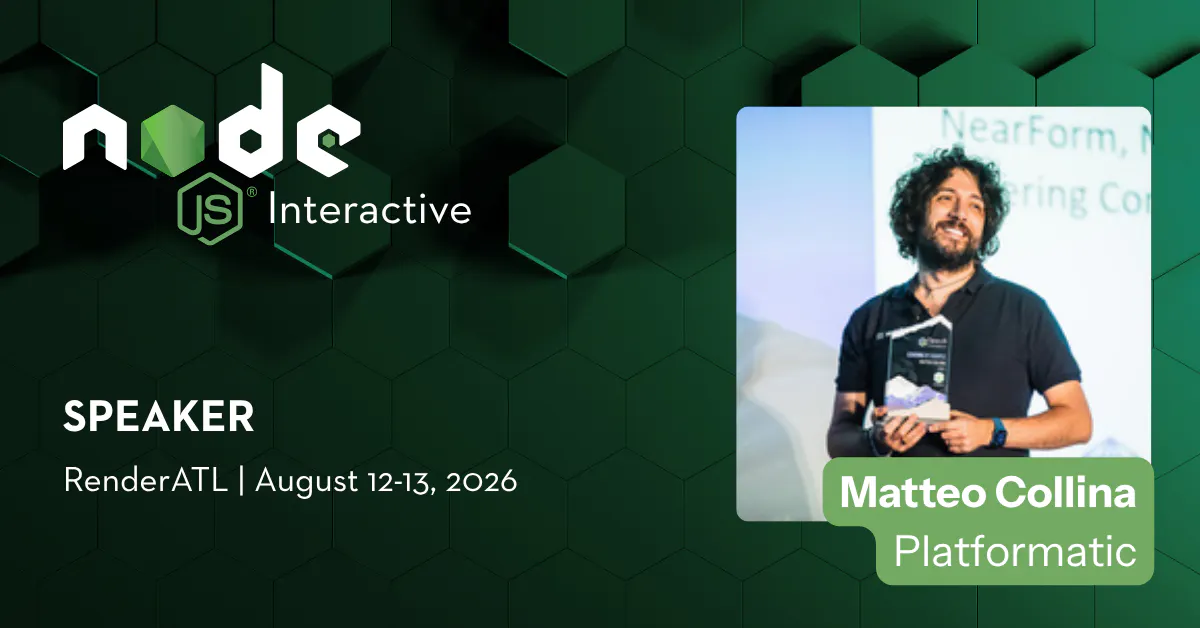
Matteo Collina – Platformatic Co-Founder and CTO, Node.js TSC member, Fastify Lead Maintainer
Matteo is the Co-Founder and CTO of Platformatic.dev. He is also a prolific Open Source author in the JavaScript ecosystem and modules he maintains are downloaded more than 12 billion times a year. Previously he was Chief Software Architect at NearForm, the best professional services company in the JavaScript ecosystem. In 2014, he defended his Ph.D. thesis titled "Application Platforms for the Internet of Things". Matteo is a member of the Node.js Technical Steering Committee focusing on streams, diagnostics and http. He is also the author of the fast logger Pino and of the Fastify web framework. Matteo is a renowned international speaker after more than 60 conferences, including OpenJS World, Node.js Interactive, NodeConf.eu, NodeSummit, JSConf.Asia, WebRebels, and JsDay just to name a few. He is also co-author of the book "Node.js Cookbook, Third Edition" edited by Packt. In the summer he loves sailing the Sirocco.
Session topic: The New Node.js: Built-in Batteries and the Road Ahead
Matteo will walk through what modern Node.js provides out of the box and show hands-on how much a project can do with just the runtime and a chosen framework in 2026. The talk covers built-in TypeScript support that works without a build step, node:test and node:assert, built-in .env configuration, native fetch powered by Undici, watch mode for development, node:sqlite, and the stable Permission System. He will also address the LTS schedule directly, including why teams still running older Node.js versions with known security issues need a concrete path to Node 26 and what the roadmap looks like from here.
Guide AI agents with structure
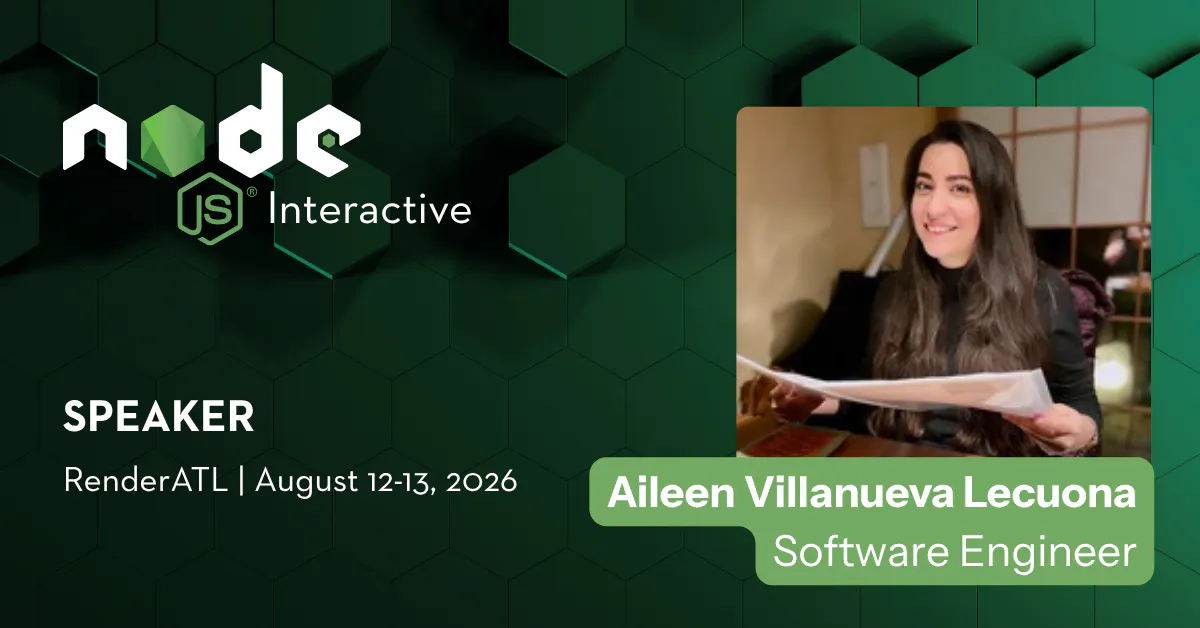
Aileen Villanueva Lecuona – Senior Software Engineer
Aileen Villanueva Lecuona is a Software Engineer, Google Developer Expert (GDE), and community builder based in Mexico. Her work centers around JavaScript, web development, and emerging AI tooling.
Session topic: Guiding AI Agents with MCP, Skills and Spec-Driven Development for Reliable Node.js Backends
Aileen’s talk focuses on how Node.js developers can move beyond basic chat prompts and actively guide AI tools using the Model Context Protocol, specialized skills, and spec-driven development. She will walk through practical backend workflows for safely giving agents database context, enforcing architectural guardrails through schemas and API contracts, and keeping humans involved at the right decision points. Attendees will leave with a realistic blueprint for bringing AI into Node.js workflows without sacrificing reliability.
Replacing What Works: doc-kit and the Next 10 Years or Node.js Documentation
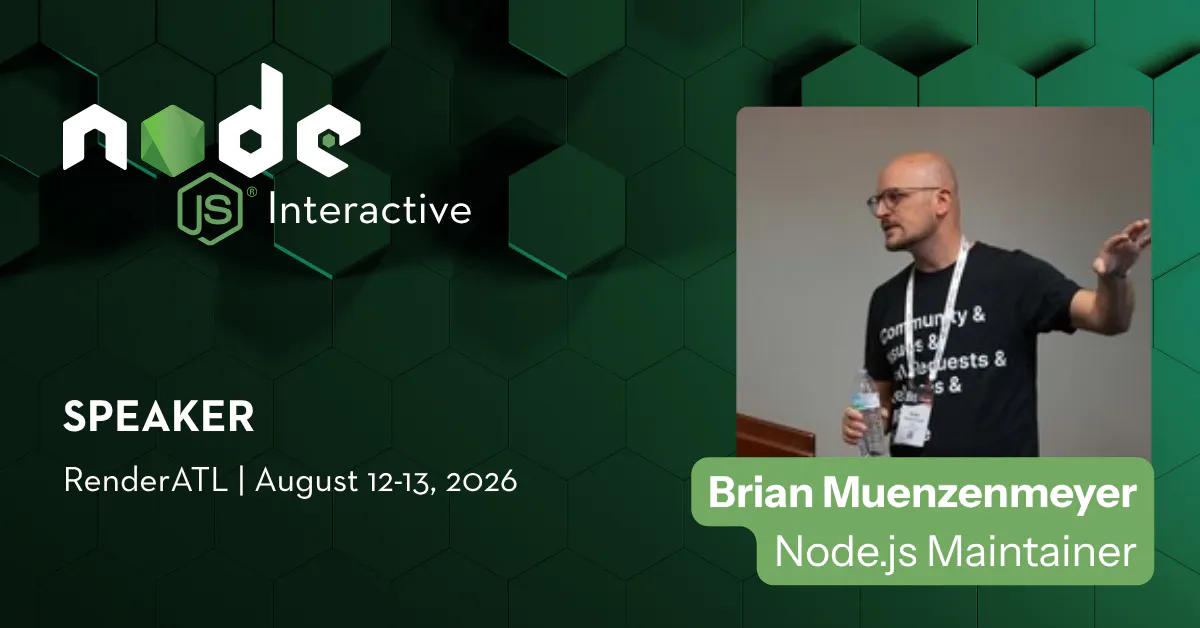
Brian Muenzenmeyer – Node.js Maintainer, Author of Approachable Open Source
Brian Muenzenmeyer is a Node.js maintainer, author, and principal engineer focused on engineering enablement and open source. His career has spanned development, UX, product management, analysis, freelancing, and community work. He maintains the Node.js website and has organized Grace Hopper hackathons aimed at helping attendees make their first open source contributions. He is the author of Approachable Open Source and has been published in Smashing Magazine, CSS-Tricks, ShopTalk Show, and Sustain.
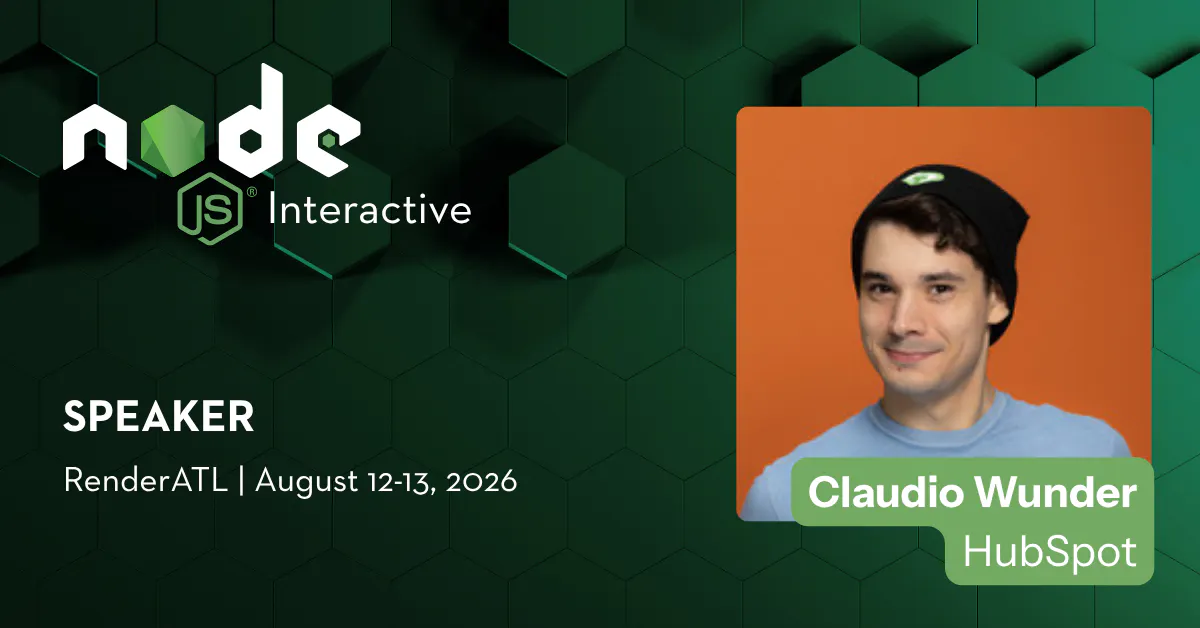
Claudio Wunder – Platform Engineer, HubSpot
Claudio Wunder is a Platform Engineer at HubSpot, where he helps maintain part of the frontend infrastructure. He is also a Node.js Core Collaborator responsible for maintaining Node.js infrastructure. Claudio serves as co-chair of webpack’s Technical Steering Committee and is a voting member of the OpenJS Foundation. He previously contributed to the GNOME Foundation.
Session topic: Replacing What Works: doc-kit and the Next 10 Years of Node.js Documentation
Brian and Claudio will tell the story of doc-kit, the standalone and customizable tool built to replace the long-running Node.js API documentation pipeline. The session covers the technical challenge of refactoring documentation infrastructure that has served Node.js since the v0.6 era while preserving trust across contributors and users. Attendees will hear how doc-kit parses, lints, and transforms Markdown into multiple output formats, including redesigned web pages, legacy HTML, man pages, JSON schemas, search indexes, and llms.txt for AI tools.
Think like a platform engineer in the AI era
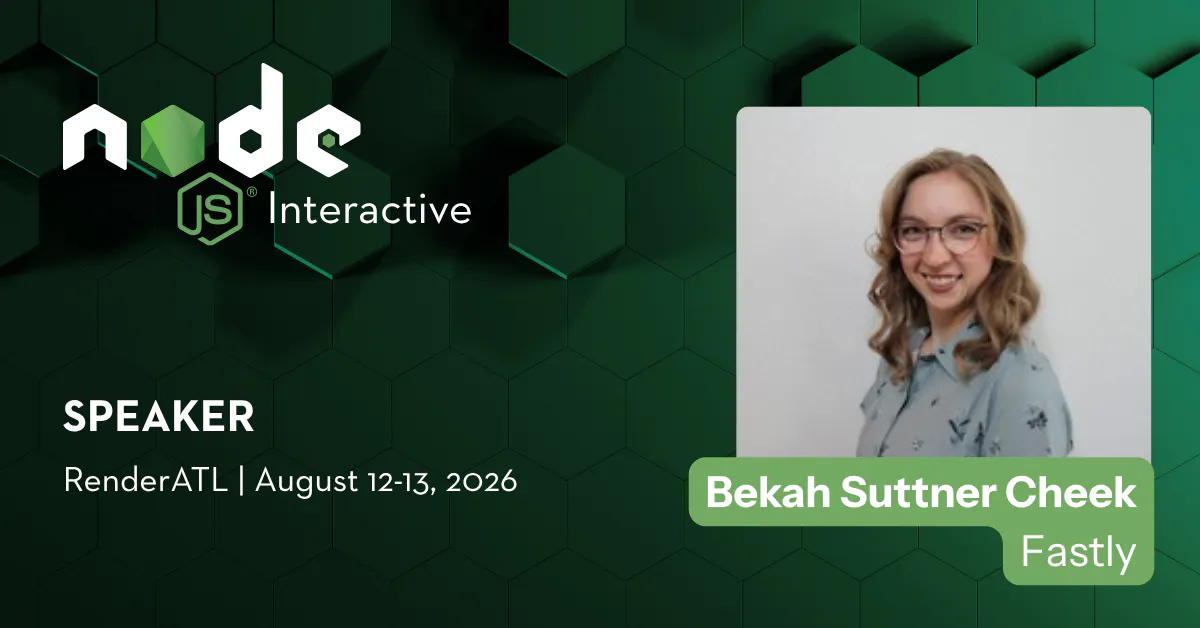
Bekah Suttner Cheek – Staff Software Engineer, Fastly
Bekah Suttner Cheek is a Staff Software Engineer on the UX Platform team at Fastly. She builds user experiences and developer tooling for internal teams. Her engineering mantra is to leave the code better than she found it, and she is happiest working at the intersection of design, development, and process.
Session topic: Platform Thinking for the AI Era
Bekah will explore why platform thinking matters as AI coding tools change how teams ship software. Her talk focuses on developer efficiency fundamentals that become more important as code volume grows, including fast CI, safe rollbacks, meaningful tests, and healthy codebase patterns. Attendees will leave with concrete strategies for evaluating whether their platform can support higher development velocity without creating tomorrow’s slowdown.
Ship the protocol: QUIC and HTTP/3 cross the line in Node.js
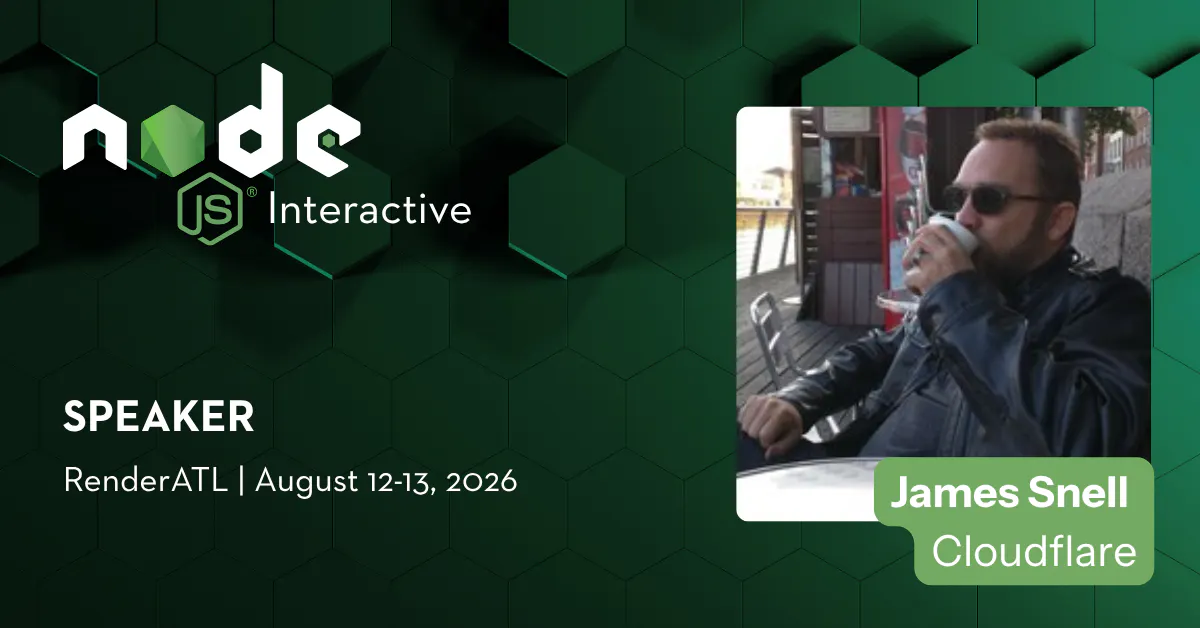
James Snell – System Engineer, Cloudflare
James is a System Engineer on the Cloudflare Workers team, a core contributor to Node.js, a member of Node.js Technical Steering Committee, and the primary implementer of HTTP/2, QUIC, and HTTP/3 in Node.js.
Session topic: QUIC in Node.js
An implementation of QUIC and HTTP/3 in Node.js has finally landed as experimental behind a compile-time flag. James will walk through the current state of that implementation and describe how the team used AI to make meaningful progress on a change set that had stalled before due to its scope, including writing tests and generating documentation alongside the core protocol work. The talk will cover where things stand now and what the remaining steps are to move the implementation out of experimental.
The infrastructure AI runs on has people behind it
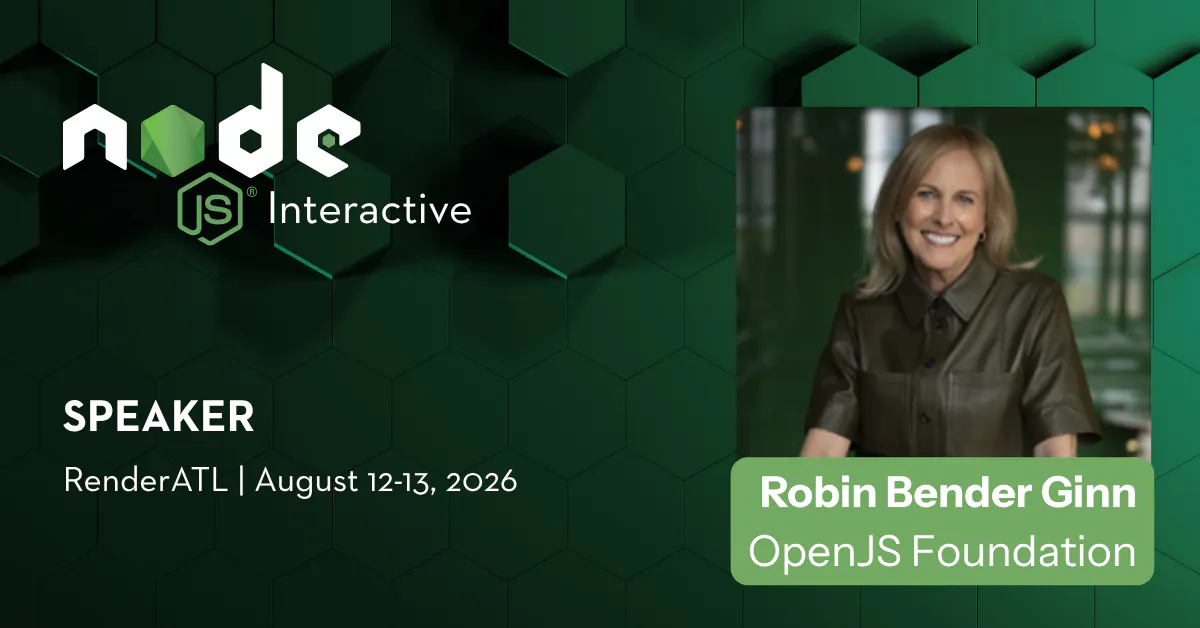
Robin Bender Ginn – Executive Director, OpenJS Foundation
Robin Bender Ginn is the Executive Director of the OpenJS Foundation. Hosted by the Linux Foundation, OpenJS is the neutral home to grow and sustain the JavaScript and web ecosystem with 35 projects including Appium, Electron, Jest, jQuery, Node.js and webpack. Previously, Robin led major initiatives at Microsoft to advance open source technologies, community development, and open standards.
Session topic: Node.js Runs AI. Who Runs Node.js?
Robin Bender Ginn will share insights from leading the stewardship of a massive open source ecosystem, examining the practical work required to keep software infrastructure healthy. Her session looks at the realities of managing billions of downloads and evolving security risks amidst the surge of AI-driven development. She will discuss the OpenJS Foundation's findings on long-term sustainability, the necessity of meaningful maintainer support, and the concrete actions teams can take to bolster the systems they use every day.
Follow the standards work that keeps JavaScript interoperable
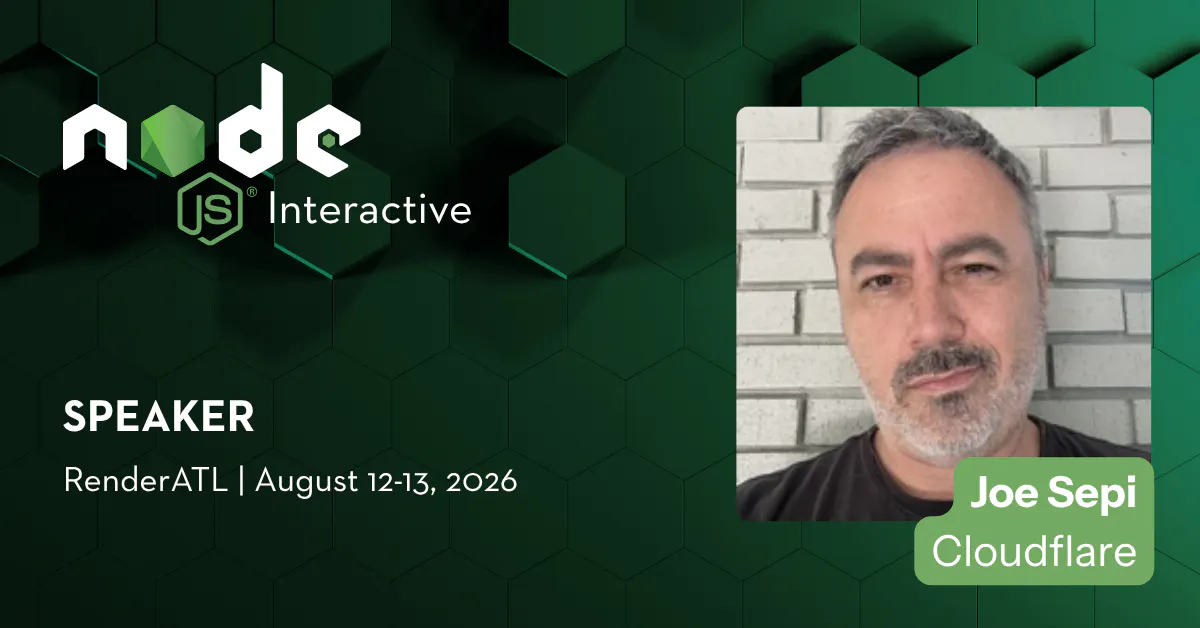
Joe Sepi – Workers Engineering Manager, Cloudflare
Joe Sepi is passionate about advancing the web forward through open source technologies and open communities. He has held engineering leadership positions at The New York Times, Adobe, Credit Suisse, Sears as well as several start-ups. From 2016-2025, Joe worked at IBM and was a leader on the Open Technologies team, working on open source and open governance in cloud and web related technologies. The last two years in that role, his focus shifted to open models and Agentic AI technologies in the open source space. In 2026, he joined the team at Cloudflare to help run their Workers platform, leading the Runtimes team and continuing his commitment to open source and the community. That’s his day job. At night, he plays in a couple punk rock bands. 🤘
Session topic: Code, Consensus, and Community: How the JS Ecosystem Continues To Move Forward Together
Millions of developers run npm install every day and deploy to infrastructure spanning every major runtime environment. The decisions about how those environments interact are made through a network of foundations, standards bodies, and community groups that most developers never see. Joe will show how the W3C, Ecma, and the OpenJS Foundation interact, how competing interests align across independent runtimes, and why that collaborative process drives developer velocity rather than slowing it down.
The talk uses the Web-interoperable Runtimes Community Group (WinterCG) as its central case study. WinterCG began as a grassroots effort to harmonize APIs across Node.js, Deno, Cloudflare Workers, and other runtimes, and has since moved into a formalized standardization track within Ecma. Joe will also cover practical ways developers can contribute to and shape JavaScript standards work, whether as active maintainers or as developers curious about how the tools they rely on get made.
Extend package metadata without replacing what already works
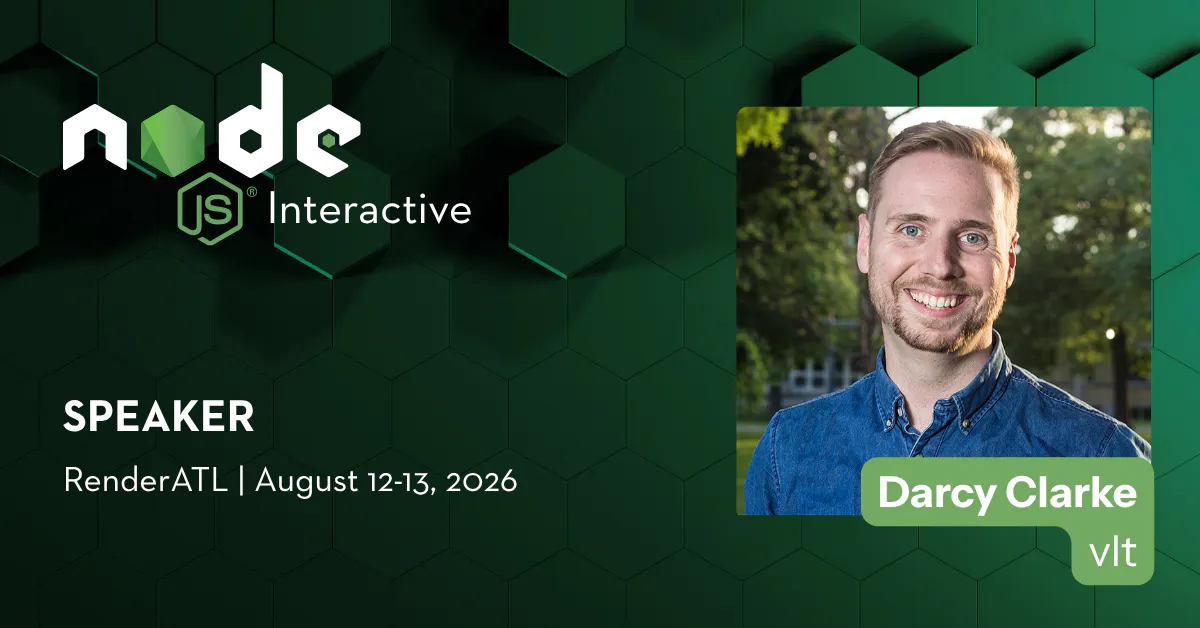
Darcy Clarke, Founder and CEO, vlt
Darcy Clarke is the Founder and CEO of vlt technology inc., an open developer platform building the next generation of package management infrastructure for JavaScript. Previously, he was a Staff Engineering Manager at GitHub, where he led the npm CLI and GitHub CLI teams while supporting more than 100 open source projects. Before GitHub, Darcy was part of the engineering leadership at npm, Inc. through its acquisition by GitHub in 2020, and earlier co-founded Themify. His work has helped shape tools relied on by millions of JavaScript developers worldwide.
Session topic: Beyond SemVer
Darcy will look at an often-overlooked part of the SemVer specification: build metadata. Rather than treating it as a place for build numbers, he will explore how it could serve as a common extension point for richer package metadata. Using dependency locks as a practical example, the talk shows how portable dependency graphs can improve reproducibility, supply chain security, and interoperability while remaining fully backwards compatible with existing tooling. The session closes on a bigger question: if SemVer standardized version numbers, what should the next generation of package metadata look like, and how do we get there by building on top of what exists rather than replacing it?
Follow the money in the npm vulnerability economy
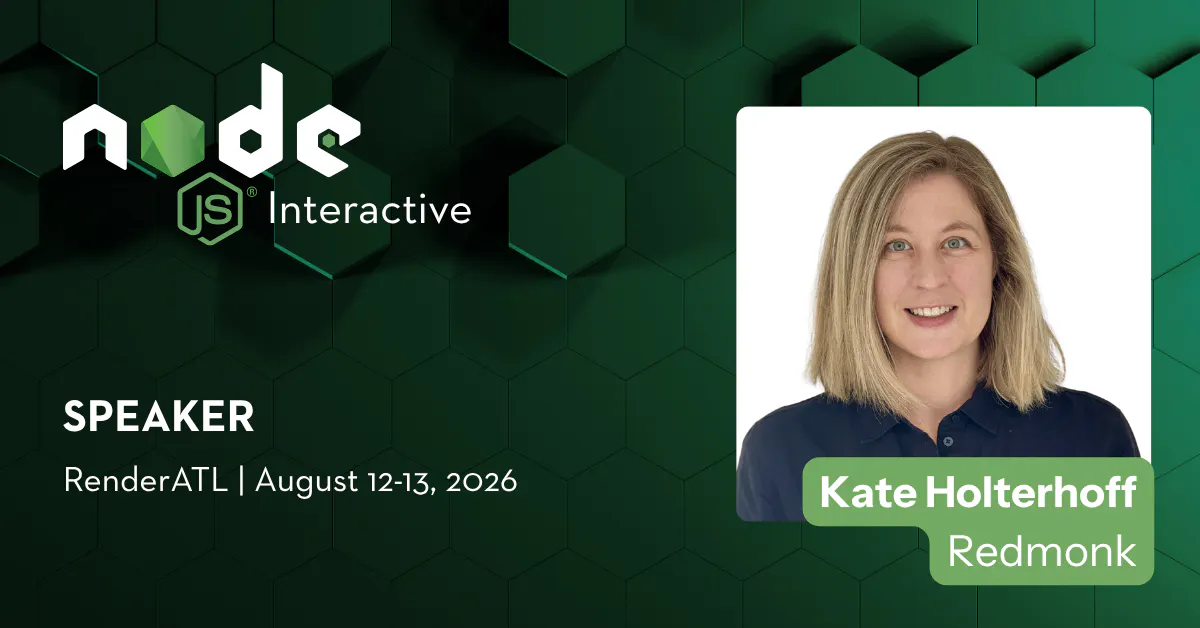
Kate Holterhoff, Industry Analyst, RedMonk
Kate Holterhoff is an industry analyst at RedMonk with a background in frontend engineering, academic research, and technical communication. She brings expertise in frontend engineering, QA, accessibility, and developer tooling. Before her career in tech, Kate taught writing and communication at several East Coast universities. She earned her PhD from Carnegie Mellon in 2016, held a postdoctoral fellowship at Georgia Tech from 2016 to 2018, and remains an affiliated researcher there.
Session topic: AI Slop and the Vulnerability Treadmill
Kate will map the vulnerability economy Node.js developers are actually operating in: the black, gray, and white markets for exploits, why bug bounties are collapsing at the moment the EU Cyber Resilience Act makes disclosure programs legally mandatory, what npm's shift to trusted publishing and short-lived tokens addresses and what it leaves open, and where money needs to flow if fixing a vulnerability is ever going to pay as well as finding one does.
Join us at RenderATL
Node.js Interactive at RenderATL brings together the people building the systems behind modern JavaScript development. These sessions are grounded in active work across Node.js, AI tooling, frontend infrastructure, documentation, performance, and open source sustainability.
Join us at RenderATL to hear from the speakers shaping what comes next for Node.js developers, maintainers, and teams building with JavaScript every day.
https://www.renderatl.com/node