Open Visualization Collaborator Summit 2025: Seattle Highlights
Check out the recap and watch the sessions from the Open Visualization Collaborator Summit 2025!
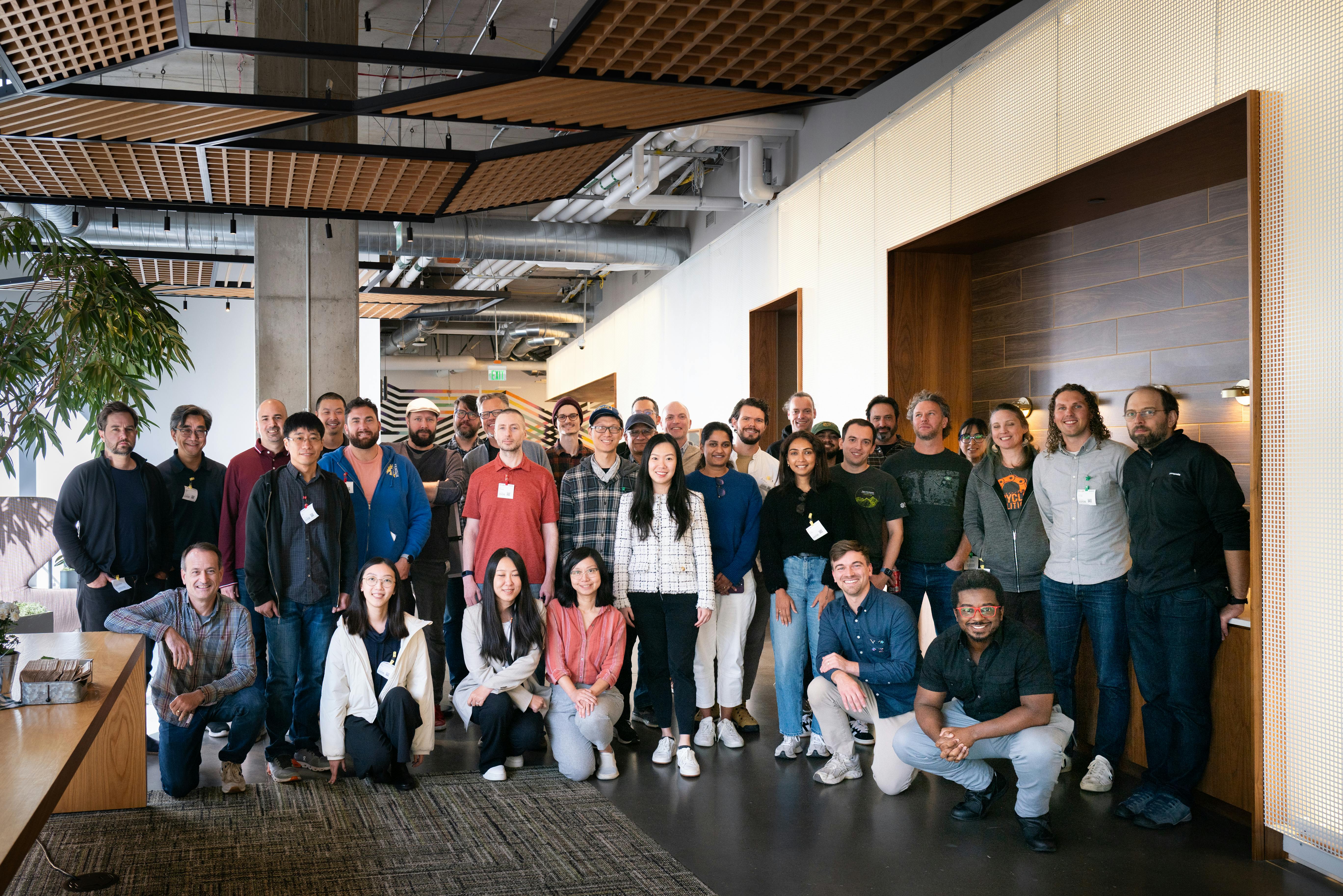
The Open Visualization community gathered in Seattle for the annual Collaborator Summit to share updates, experiments, and new ideas across the vis.gl ecosystem and related projects. The sessions covered everything from faster GPU rendering to smarter AI tools for working with spatial data, showing how these projects are shaping the future of web visualization.
Read on for a recap of the event, and watch all sessions on demand on YouTube. 📺
Modern Graphics and vis.gl Updates
The vis.gl TSC kicked things off with updates to deck.gl and luma.gl focused on performance, interactivity, and modernization. Version 9.2 introduces early WebGPU support, unlocking modern GPU features like compute shaders, asynchronous reads, and advanced texture formats. deck.gl also added a Widgets class for building interactive dashboards and an official A5Layer for rendering geospatial index cells, while luma.gl refined its API, improved TypeScript compliance, and added new GPU utilities.
AI and Geospatial Analytics
GeoDa.ai and its OpenAssistant were a highlight of the summit, showcasing advanced tools for AI-assisted geospatial analysis. Xun and Julia demonstrated how OpenAssistant integrates with frameworks such as LangChain and Kepler.gl, allowing users to analyze and interact with spatial data through AI-powered assistants. Julia also emphasized the openness and collaborative nature of the community:
“The culture of OpenVis and the OpenJS Foundation is actually open for real: it’s welcoming, engaging, curious, and pushing boundaries. These are people’s passion projects—I ran into Adam Krebs at midnight updating noodles.gl based on summit feedback while we were boarding our flights!”
Cosmos.gl: Graphs at Scale
Nikita introduced cosmos.gl, a GPU-powered graph visualization library capable of handling millions of nodes and links entirely in the browser. Using a multi-grid approximation approach with WebGL shaders, cosmos.gl also doubles as a rendering engine for ML embeddings and creative particle simulations. Early experiments with WebGPU and compute shaders show promising directions for even faster performance.
In-Browser Analytics and Indexing
SQLRooms is making analytics simpler and serverless. Ilya Boyandin demonstrated a React toolkit that embeds DuckDB in the browser using WebAssembly, allowing users to query, visualize, and explore data without a backend. The toolkit integrates an AI assistant to translate natural language into SQL queries, making data more accessible to developers and analysts alike.
Meanwhile, Felix shared progress on A5, a next-generation geospatial index developed with deck.gl and modern AI techniques for Python and Rust porting, highlighting new possibilities for high-performance spatial analysis.
3D Tiles, Visual Programming, and Framework-Agnostic Components
Other highlights included Tessera, an open-source tool for accurate geometric error calculations in 3D Tiles, and Noodles.gl, a visual programming library that bridges geospatial analysis and interactive storytelling in the browser. Talks on unifying deck.gl’s FirstPerson and Map views, and on building framework-agnostic web components, emphasized scalable, long-term approaches to web visualization.
AI-Driven Development
Ryan’s session, “Vibe Your Viz,” underscored the rise of AI-native workflows for visualization developers. He shared tools like GMP Code Assist, an open-source server that teaches AI agents to use vis.gl effectively, and Places Insights in BigQuery, enabling large-scale geospatial SQL analysis. These developments point to a future where AI accelerates exploration and creation without replacing human creativity.
The summit showcased how the Open Visualization community is pushing boundaries on multiple fronts: GPU performance, AI-assisted analysis, and flexible, open-source tools for the web. Between demos, discussions, and late-night hacking sessions, it’s clear this ecosystem is built by passionate developers for passionate developers.
For those who missed the event, check out the projects mentioned here and get involved in the community: Open Visualization Collaboration Space.
Big thank you to our host Google, and to our organizers: Chris Gervang, Ib Green, Xiaoji Chen and Felix Palmer.